Case study
Refactoring a category page for SEO with AI
Client
Industry
Year
Status
Overview
The Business Trigger: Breaking Paid Traffic Dependency
Elo7 historically relied heavily on paid acquisition traffic to remain competitive. As part of a major strategic pivot, the company aimed to reduce the paid traffic spend and shift toward organic discovery. To achieve this, we started an initiative with several steps to repair the platform's SEO infrastructure and increase visibility on Google. One of these steps was to tackle our outdated Category Page.
Problem
The Challenge: A Flat Architecture for a Deep Tree
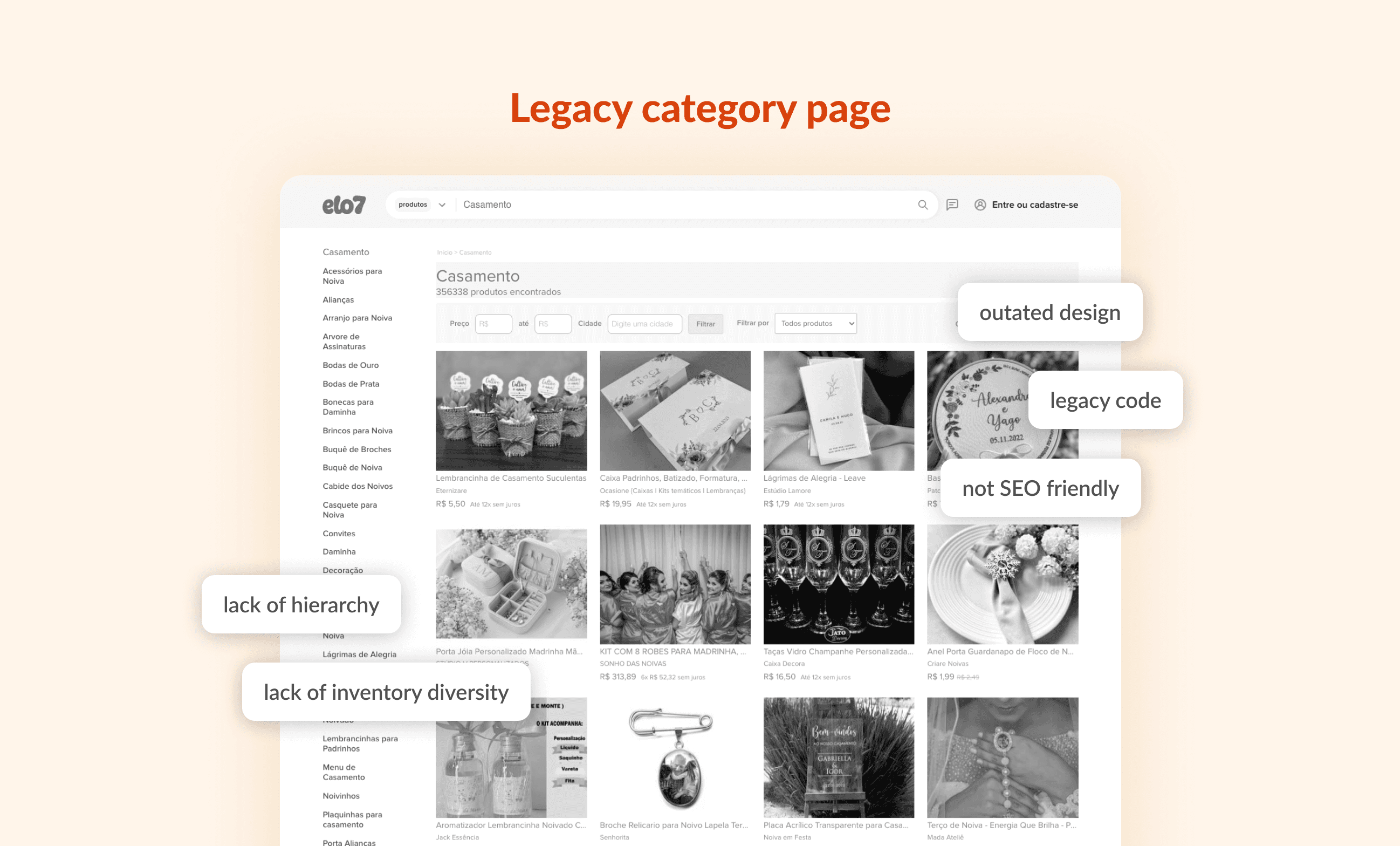
The Category Page was an engineering and design debt: an outdated layout that didn't follow our new Design System, displaying a simple product listing with an alphabetical list of subcategories on the side.
From both a user experience and an SEO perspective, this architecture was failing:
No Information Hierarchy: Top-selling subcategories were displayed right next to small niche categories with minimal sales.
Stagnant Content: The first page of products rarely changed, frustrating recurrent visitors who found the exact same inventory over and over.
Not SEO Friendly: Due to a lack of contextual hierarchy, semantic text clusters, or internal link structures, crawlers struggled to understand what the page was about.
Solution
Building a scalable and automated template to eliminate paid traffic dependency
Translating Data into UI Guardrails
I partnered with our Data Analysts to understand the metrics of our Category pages. They delivered a dashboard mapping sales volume, user interest, and click-through rates across the entire category tree.
Based on the dashboard, I was able to understand which categories were sold effortlessly, which ones deserved more attention, and how to create a hierarchy that would work to better showcase the wide range of products we could offer.
Building a structured layout with rich content
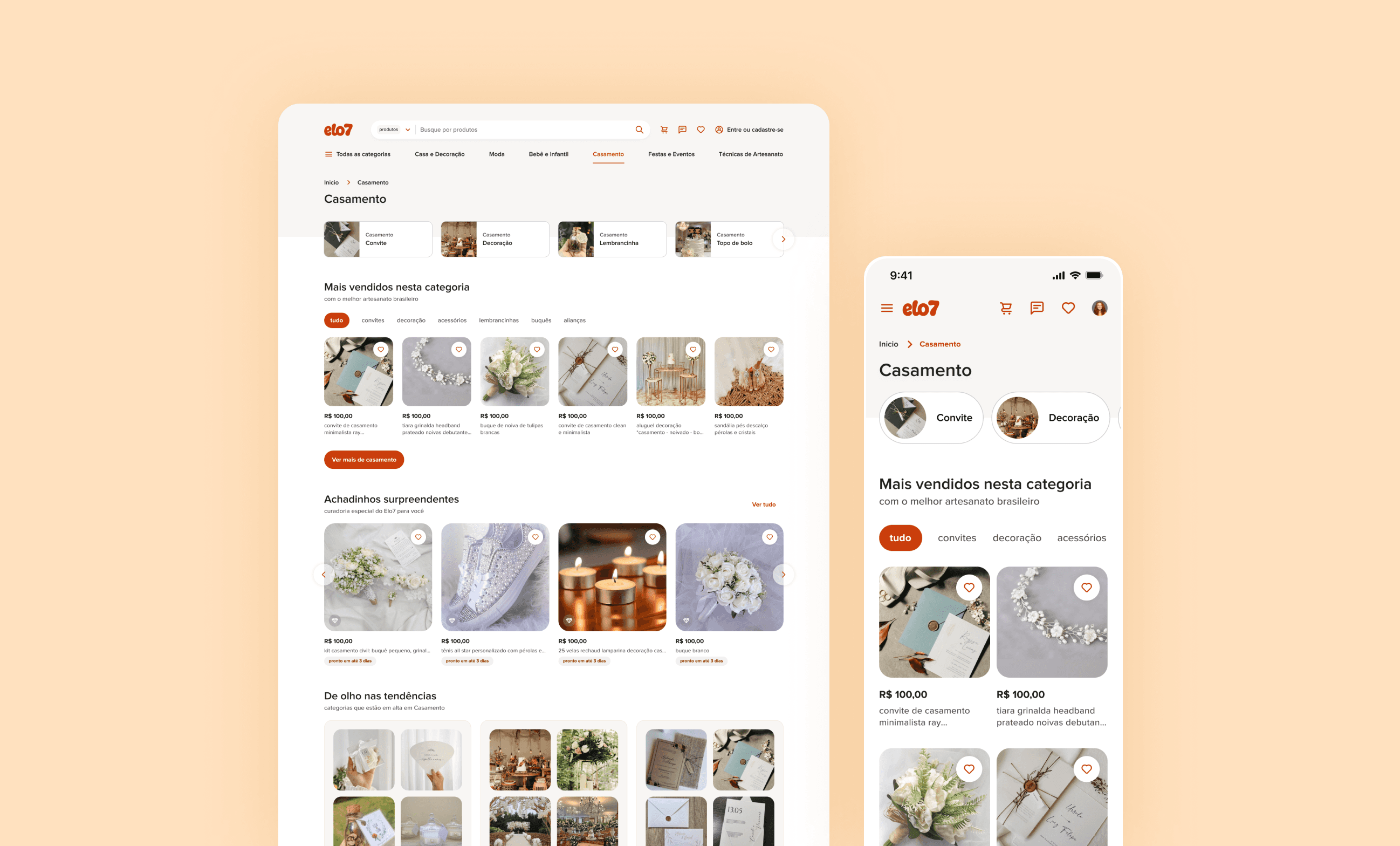
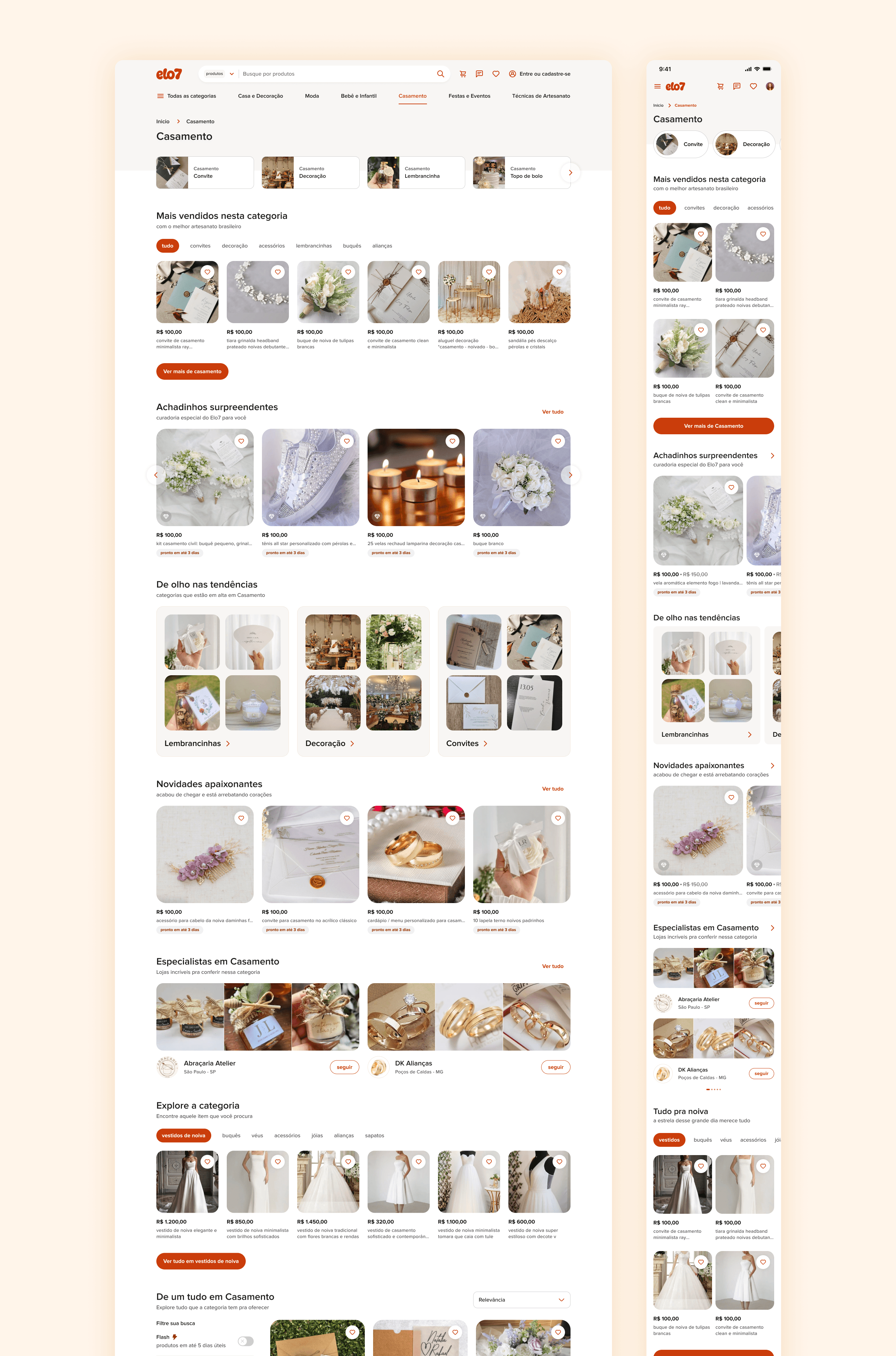
With that in mind, I designed a modular, responsive master template built to dynamically showcase each category:
A functional header: A big visible title, breadcrumbs for SEO and a quick access menu ordered by the most clicked subcategories.
The revenue layer: A section highlighting the best-selling subcategories, followed by mid-tier performing subcategories to showcase our inventory's diversity.
Dynamic carousels: Dedicated slots for New Arrivals, Top Picks and Trends to ensure returning users would always discover new products.
Conditional visibility: Each module featured strict layout guardrails. If a specific niche category didn't have the amount of data required to fill a component, that section was suppressed without breaking the layout.
Template flexibility: The modules could be reorganized based on weight settings, and I included a slot for custom content (banners or carousels), allowing the marketing team to change the layout for seasonal events or special occasions.
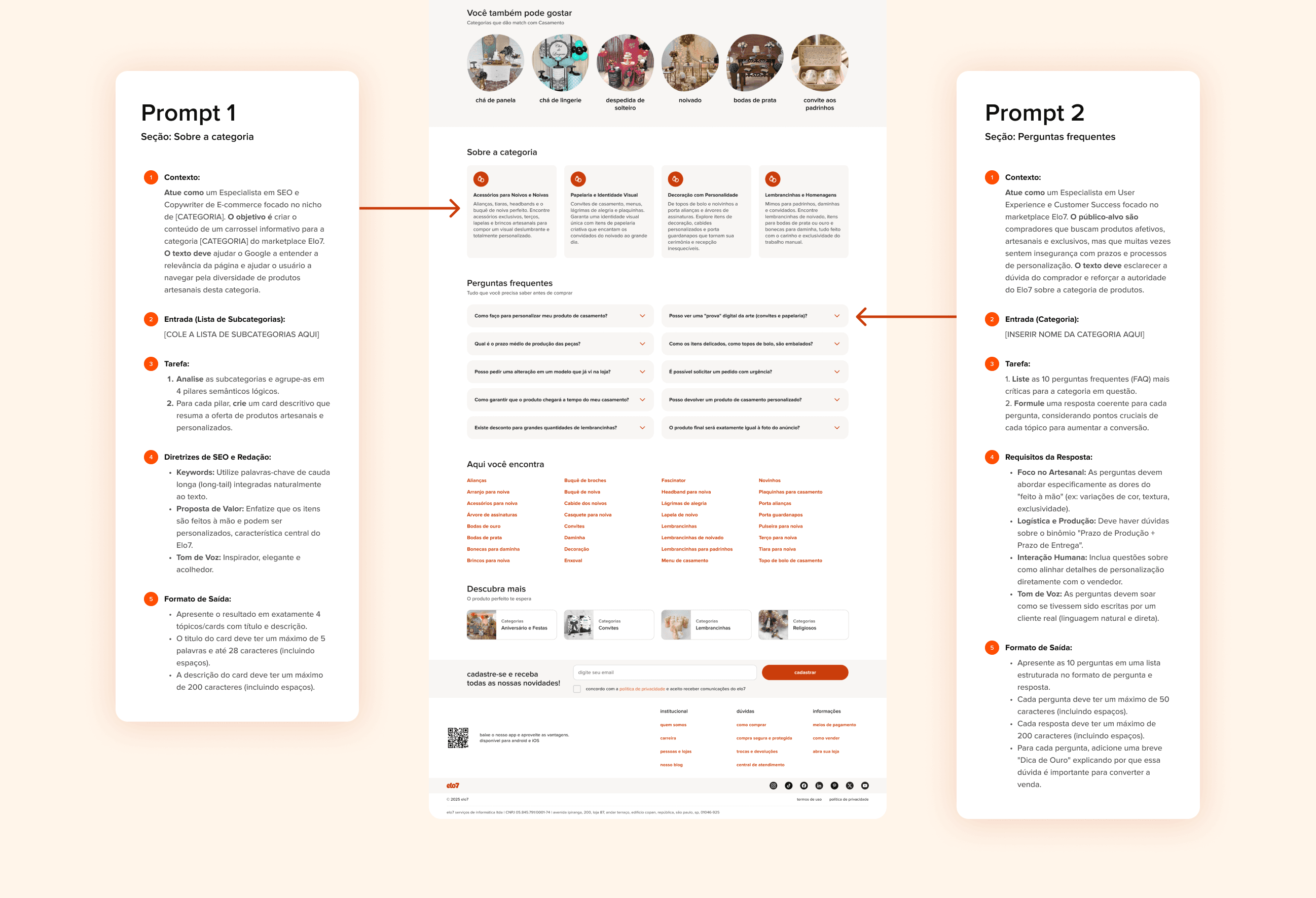
The Technical Core: To feed the critical SEO footer, the page required a rich content area consisting of an “about the category” section with cards showcasing product clusters and keywords, an interactive FAQ section, and the subcategory list.
SEO validation and Prompt Engineering
After defining the structure of our core template, I collaborated directly with our Tech Lead (who also served as our SEO specialist) to make sure we were fulfilling all the requirements.
The Scale: 20 categories with an average of 50 subcategories each, manually designing individual landing pages and writing custom copy for more than 1,000 items was basically impossible.
To address this issue and eliminate the need for an army of content writers, I integrated prompt engineering into my design handoff. I designed and tested two structured backend prompts using the "Weddings" category as our pilot design example.
Layout safeguards: The prompts included rigid token constraints and structure guardrails defining the exact text length, character counts, and array limits for each element. This ensured that the AI-generated content would never break the UI container bounding boxes or trigger layout shifts.
Platform guardrails: The prompts forced the LLM to write copy that adhered strictly to Elo7’s brand voice, safety compliance guidelines, and target marketplace terminology.
The Impact Proxies: While corporate restructuring ultimately led to the platform being discontinued right before this feature entered development, the architectural efficiency of the design was fully validated:
Outcome
Projected results
Had the platform not been discontinued right before development, the implementation of this AI-driven category template was engineered to achieve the following outcomes:
Organic Growth: Transforming the legacy listing pages into rich, structured content hubs would repair organic traffic, signaling accurate hierarchy to web crawlers and reducing the dependence of paid traffic.
Operational Scalability: Integrating structured prompt engineering and layout guardrails would eliminate the need for manual copy creation across thousands of subcategories.
Engineering Speed: The solution reduced development time from months of repetitive front-end builds to just 5 days of initial engineering setup, turning a massive content bottleneck into a self-sustaining loop.
Final thoughts
An strategic reflection
This project perfectly encapsulates how I bridge design strategy with systems engineering. By looking past static layouts and treating data as an active UI framework, I turned a massive content bottleneck into an automated, self-sustaining loop. It stands as a prime example of how Product Designers can leverage AI not just as a casual brainstorming assistant, but as a core component of production-ready, hyper-scalable software delivery.