Case study
From single to multiple distribution centers
A logistical transformation in a leading platform to reach the mid-market
Client
Industry
Year
Status
Overview
The business trigger
Nuvemshop was already the leading e-commerce platform in Latin America, with well-established operations in Brazil and Argentina, and expanding to Chile and Colombia. With 100k+ active merchants, 90% support approval rate, and R$ 5.8 bi in sales in 2021, their presence was already solid among Small Businesses (companies with up to 100 employees that made up to R$ 50mi of annual revenue). In 2022, they were ready to conquer the next level: the Middle Market, which was composed of companies with 100-999 employees and made from R$50 million to R$1 billion annually. But to achieve that, the platform would need a major change to meet their needs.

Problem
How to support bigger companies with larger operations
Looking at their competitors that were already supporting the middle market, like Shopify, Vtex, and Tray, they all had a structure to support more complex logistics.
Nuvemshop’s logistics at that point supported only one location. Talking to prospects and leads, the critical point for them to be able to migrate to Nuvemshop was that the platform could support multiple distribution centers.
We knew what to do, but we had 3 problems in mind:
How to go from one to multiple distribution centers?
We didn’t have the know-how.How to deliver a major feature like that?
It would impact so many aspects of the platform.How to keep it simple for the small businesses?
We didn’t want the platform to look too complicated for smaller companies.
Solution
A well structured plan for a major structure change
Understanding the job to be done
To deliver a major feature like that, we first needed to get the know-how. So we talked to our prospects to understand how their operations worked, how they managed their logistics, which ERP platforms they were using to manage their stock, and what they needed our platform to offer.
The second step was benchmarking our competitors and getting a sense of how they were approaching this issue, what they were doing well, and what they were not. We also asked our prospects what their pain points were in working with our competitors.

Defining a strategy
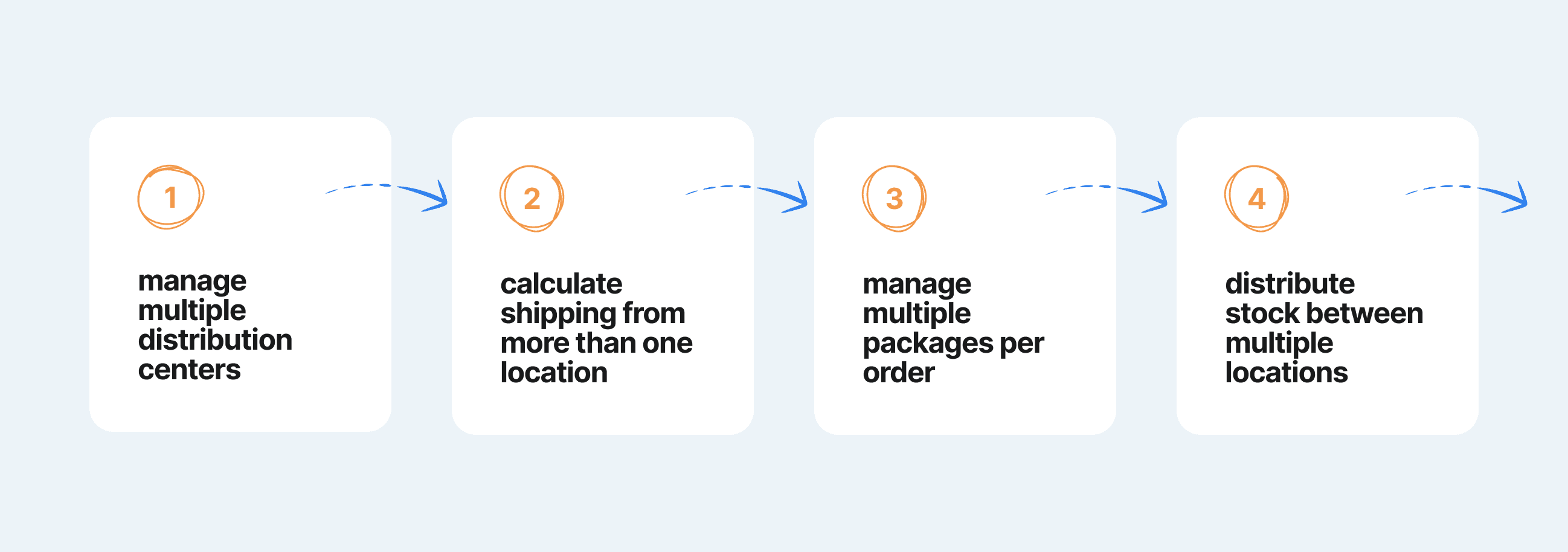
With this step done, we drew the blueprint for the Multi-DC project, and then we divided it into 4 phases:
1. Manage multiple distribution centers
2. Calculate shipping from more than one location
3. Manage multiple packages per order
4. Distribute stock between multiple locations
To achieve that, we applied the shape-up methodology to help define each step: setting the appetite, narrowing the problem, outlining the solution, removing the rabbit holes, and writing a pitch. This document would be the anchor to make sure we were going in the right direction.
Building the feature, step by step
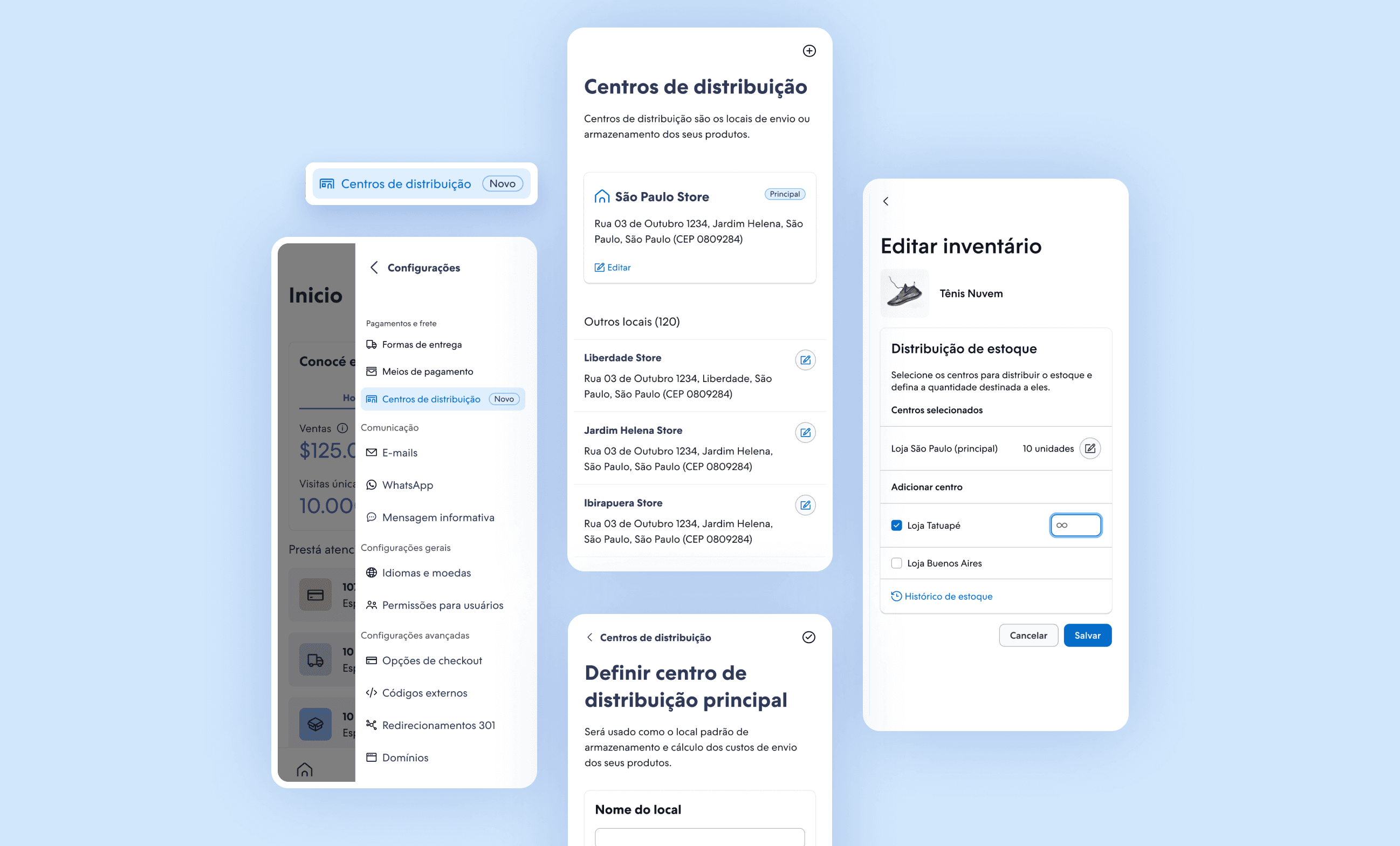
In phase 1, we created the structure to allow merchants to manage multiple distribution centers. To make this transition easier for users, we converted their primary shipping address into their main distribution center and allowed them to add secondary ones.
In phase 2, we made it possible to calculate shipping from more than one location and compare which one was the best to fulfill the order. If a merchant had more than one distribution center, they could also set it for each product in their catalog.
At this point, we could only fulfill an order if all the products in the cart were coming from the same location. If more than one location could fulfill the order, we would show the customer the fastest option and the cheapest option available.
In phase 3, we made it possible to manage multiple packages per order. This step was crucial to make sure we would always be able to fulfill an order and show the best shipping options. At this point, the customer’s cart could be fulfilled with one or multiple packages coming from one or multiple locations.
In phase 4, we addressed the final issue to allow the merchants to distribute and manage their stock between multiple locations. We also finished the API to allow them to connect their stock with the ERP platforms they were already using, which was the last thing we needed to finish this project.
Throughout the process, which was going on for more than a year, we always kept track of our users’ feedback, and we made several rounds of testing, iterations, and validations to ensure the feature was working as intended and it was meeting our merchants’ needs.


Outcome
What we achieved and the projected results
The first results we got
At the time I wrote this case study, by the end of 2023, we had phases 1 and 2 already in production, while phases 3 and 4 were being validated by our beta testers. At that moment, we already got some good indications of success:
100% active merchants
with their addresses migrated to locations
100% of new stores
created have the new feature already activated
300+ stores
with more than one distribution center created organically in 30 days
80% approval
of the new order details page (with multiple fulfillments)
Projected Strategic Value
Transitioning from a single location to a multiple distribution center model was not just about adding a feature, but it was a crucial step to expand Nuvemshop’s market reach while bridging the gap between small business simplicity and mid-market complexity.
By allowing larger merchants to sync their stock with existing ERPs and ship from multiple locations, this project was the foundation for Nuvemshop to be able to compete with other platforms and capture its share of the Latin American mid-market e-commerce.
Final thoughts
What I learned
Big changes need a great map: Huge features take a lot of teamwork and careful planning. Breaking it down step-by-step was the only way to keep everyone aligned and keep track of our progress.
The MVP is the foundation: When building something complex like this, the first release won't solve every problem right away. But that’s okay. It’s a necessary step to get to the idealized results while testing and learning from real users.
Grow without forgetting your roots: The biggest design challenge was adding powerful tools for larger stores without making the platform feel too complicated or overwhelming for our existing user base of small businesses. Keeping that in mind, we were able to build a product that resonated with everyone.