Case study
Introducing a financial product for merchants
The Trade product as Olist's acquisition engine
Client
Industry
Year
Status
Overview
The business trigger
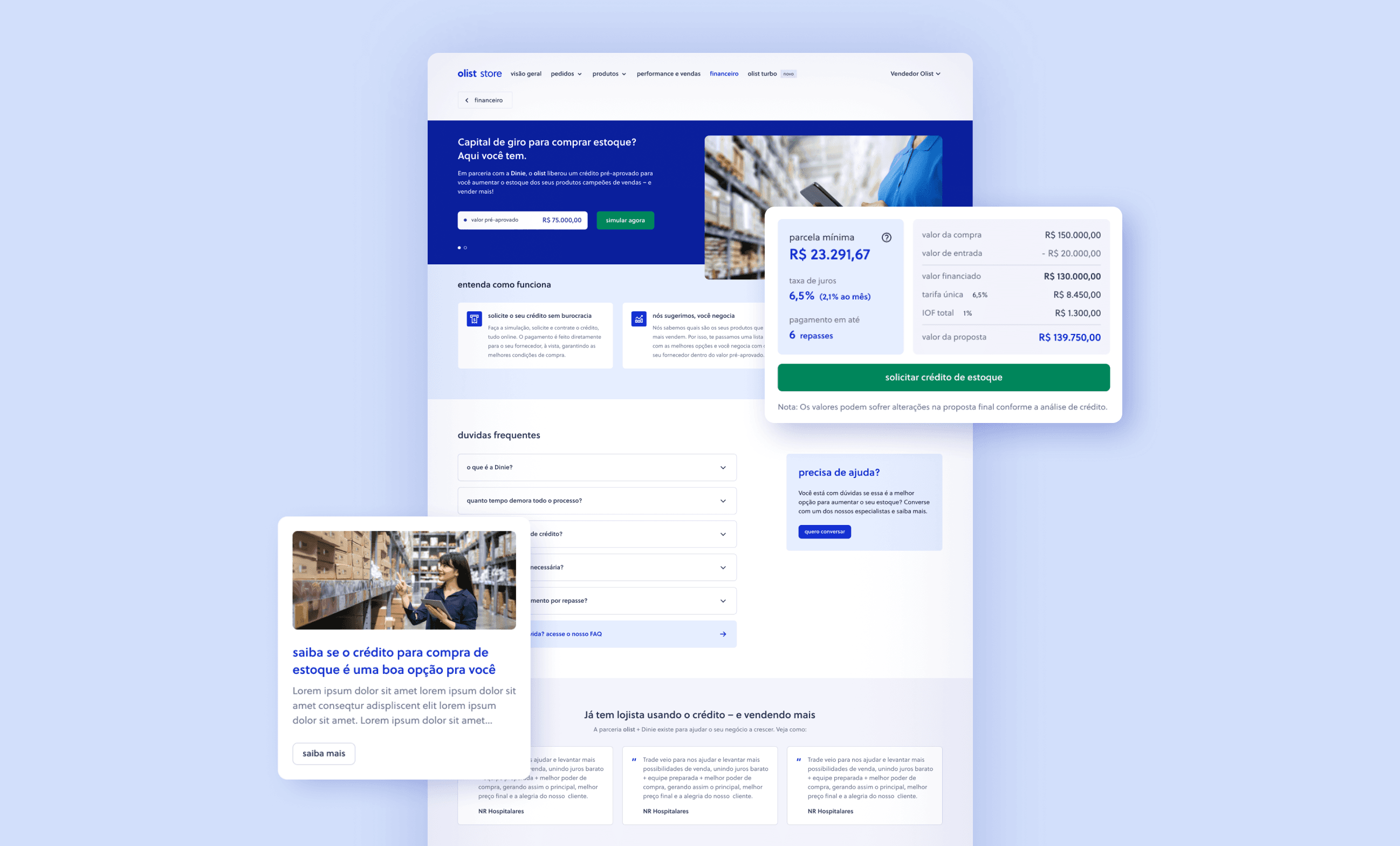
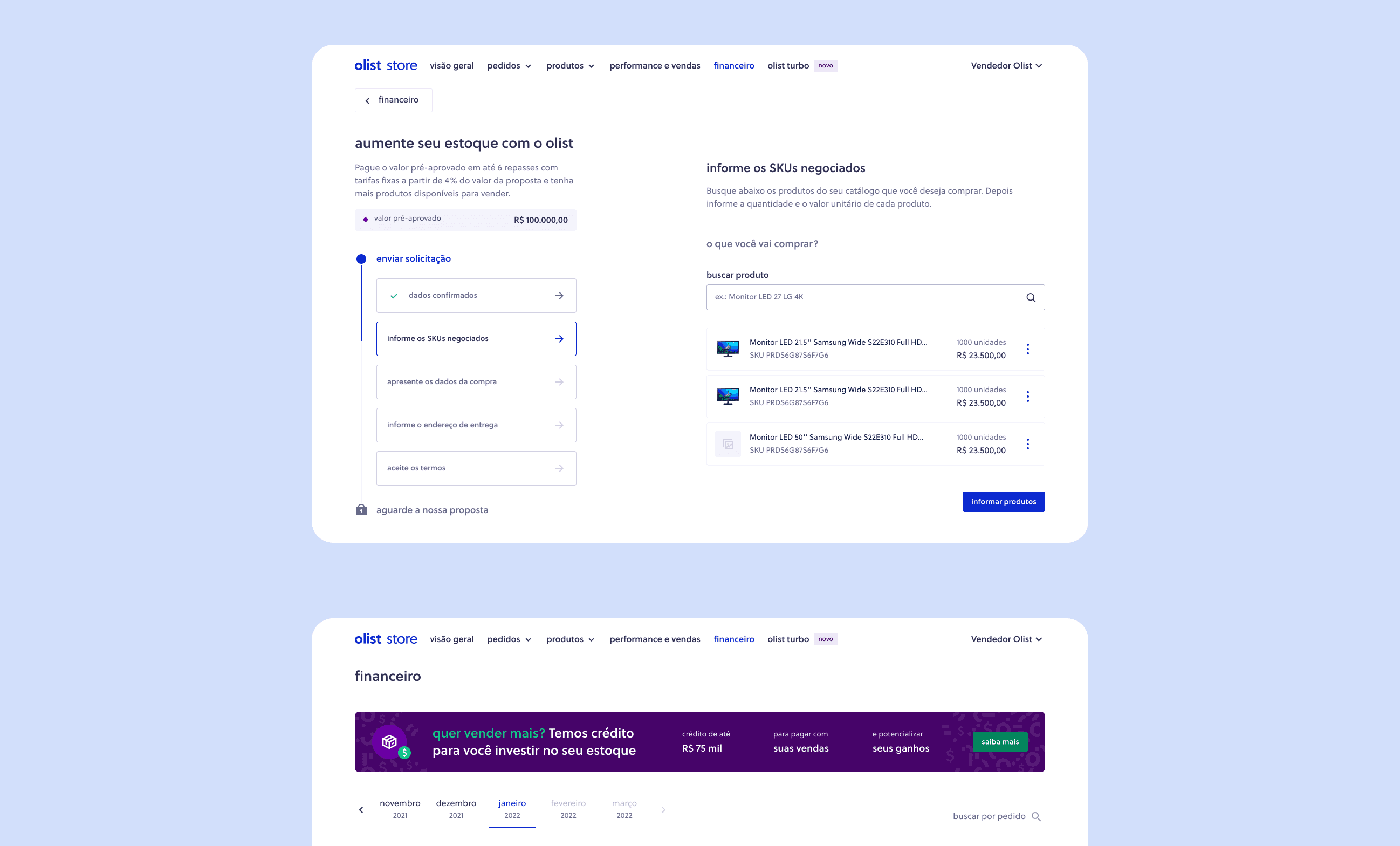
In 2022, Olist developed Trade, a working capital solution for merchants on the Olist Store platform. The product's goal was to finance inventory purchases directly with suppliers, securing better quotes through upfront payments. Merchants repaid the credit in installments deducted from their future sales, settling the investment only after the product was sold. Following a successful run with beta testers, the Financial Services squad recognized the product's potential as a competitive differentiator to attract new clients. As the Product Designer, alongside a cross-functional team of product, marketing, and UX writing professionals, I led the creation of a strategic Landing Page, translating a complex financial service into a clear, high-converting value proposition for the external market.
Problem
Credit complexity vs. the need for rapid attraction
Although the product was validated internally with beta testers and backed by positive fake-door testing results among other merchants, interviews revealed that its mechanics initially seemed complex and bureaucratic to them.
When the business team decided to leverage Trade as a hook for an external audience (leads who were not yet familiar with Olist), we faced the following challenges:
Cognitive Overload: Communicating fee structures and payout dynamics in a simple, transparent manner.
Perceived Bureaucracy: Long, dense pages triggered user distrust, raising concerns about hidden downsides.
Scope Misalignment: Synthesizing marketing's commercial appeal with the product's business rules.
Solution
Translating a complex product into a simple landing page
Co-Creation Dynamics and Agile Alignment
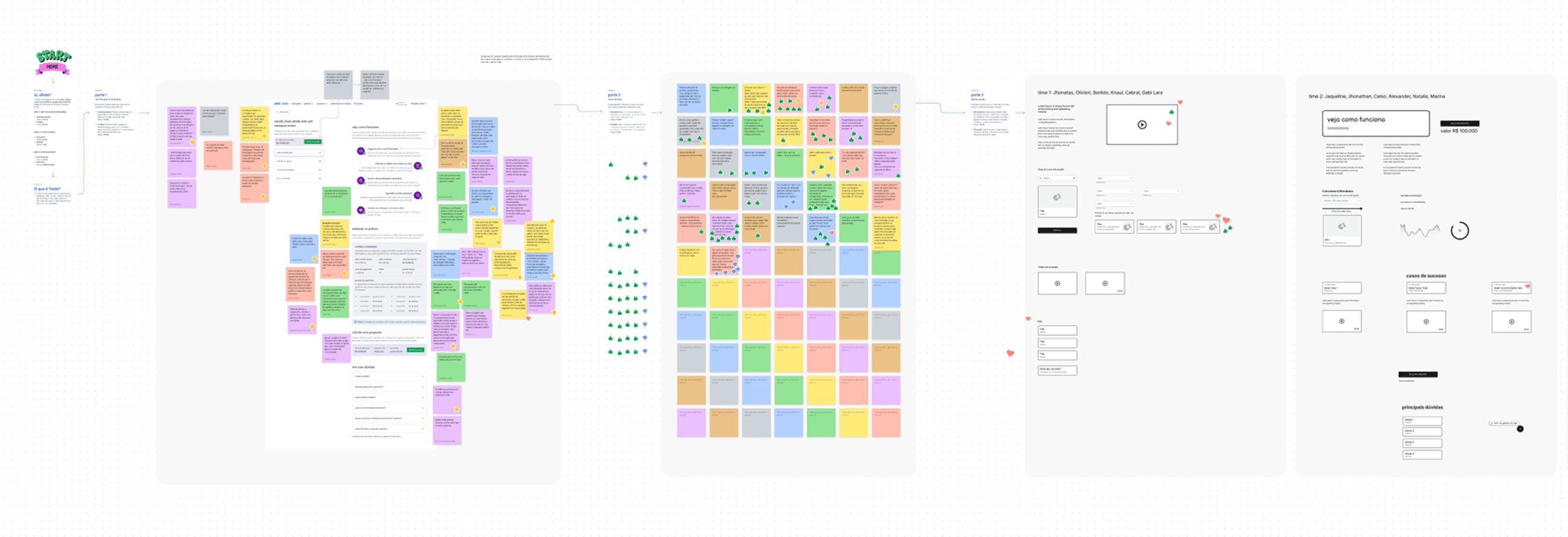
I led the design process using a collaborative approach within a temporary squad (Design, PM, PO, Content, and Marketing). We established kickoff rituals, daily peer-work sessions, and asynchronous Slack channels to ensure that technical, business, and marketing requirements were mapped and integrated from day one.
Simplifying architecture and UX writing
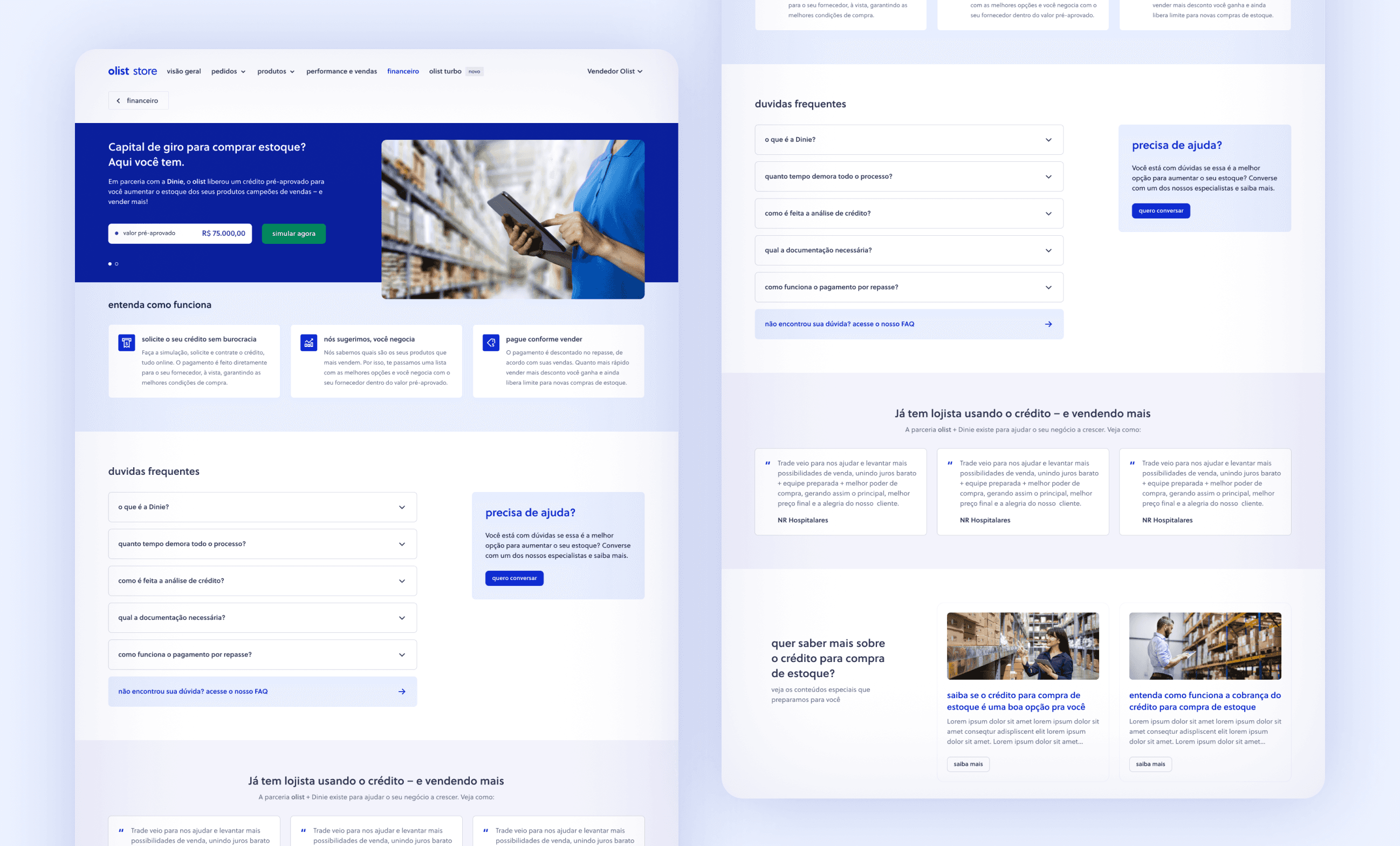
During design critiques and wireframe testing rounds, we identified that the page's initial structure was lengthy and tedious. In partnership with the UX Writer, we redesigned the information architecture: we merged the "how it works" section directly with the practical cash flow benefits and replaced complex legal jargon with direct, objective microcopy.
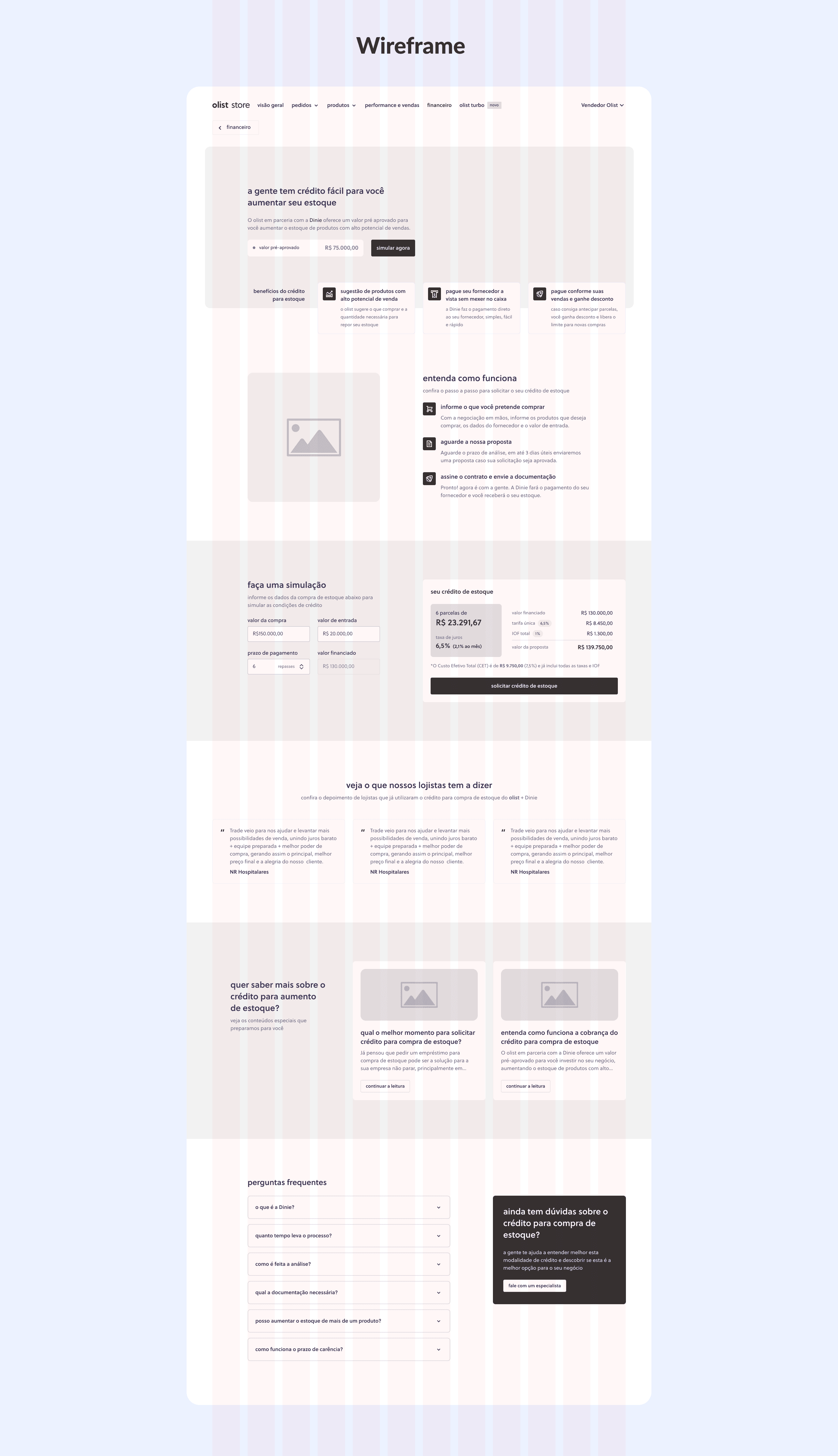
The simulator on the spotlight
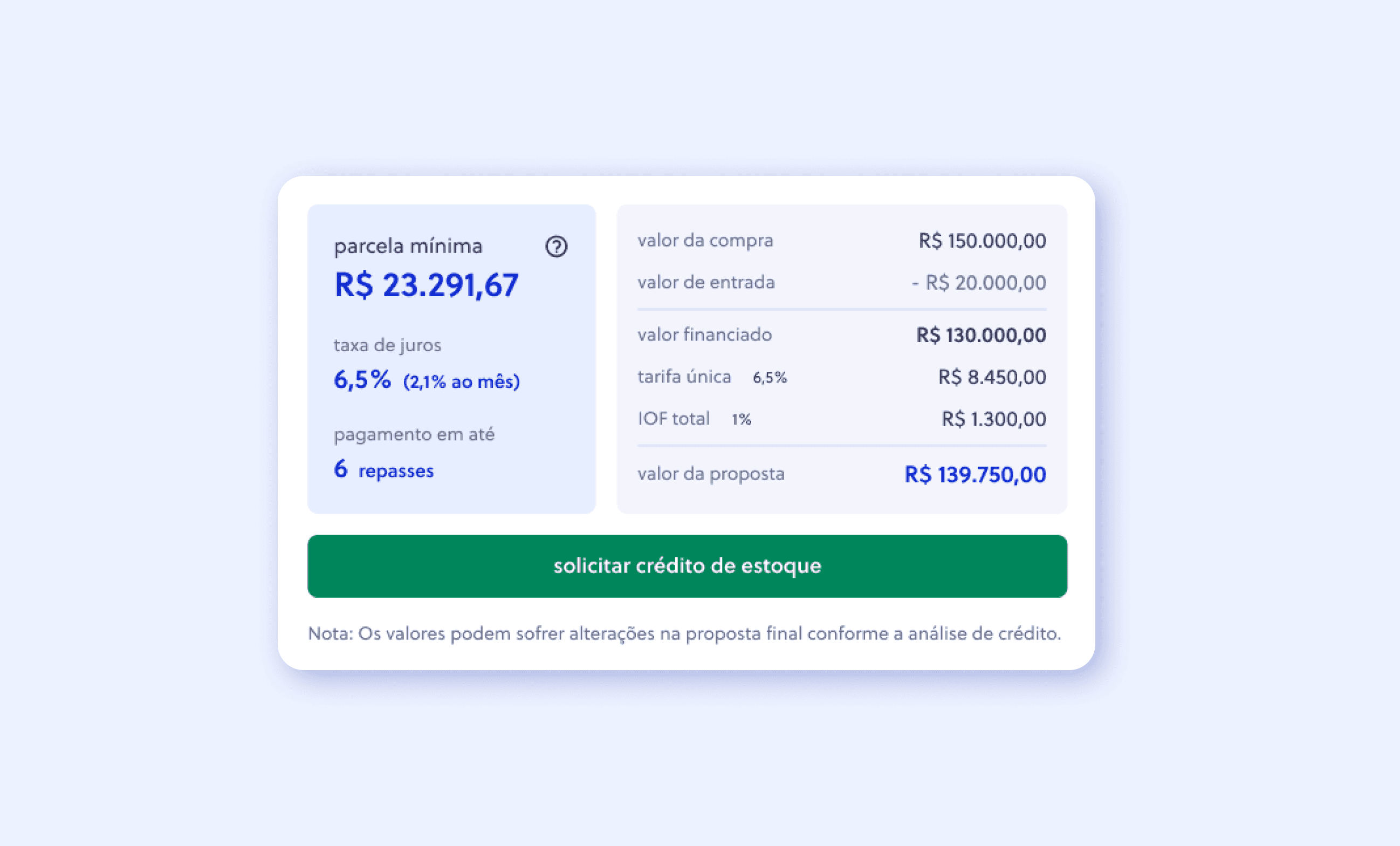
Replicating the successful insights from the platform’s internal interface, we positioned a Financial Simulator as the core component of the Landing Page. This tool allowed potential customers to interactively and visually simulate real credit scenarios, breaking the perception of bureaucracy and accelerating the decision-making process.
Outcome
From a complex financial product to the primary growth hook
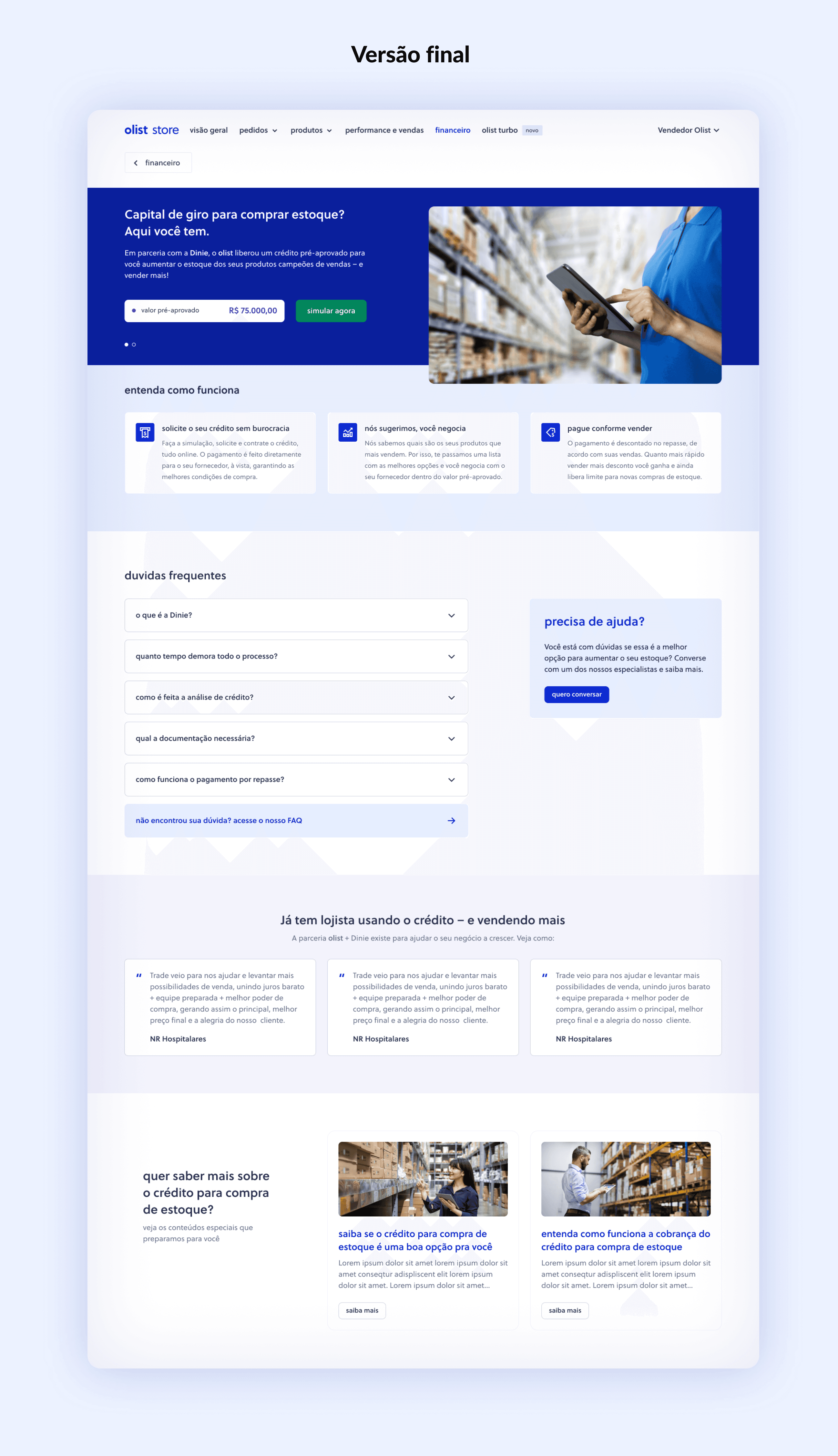
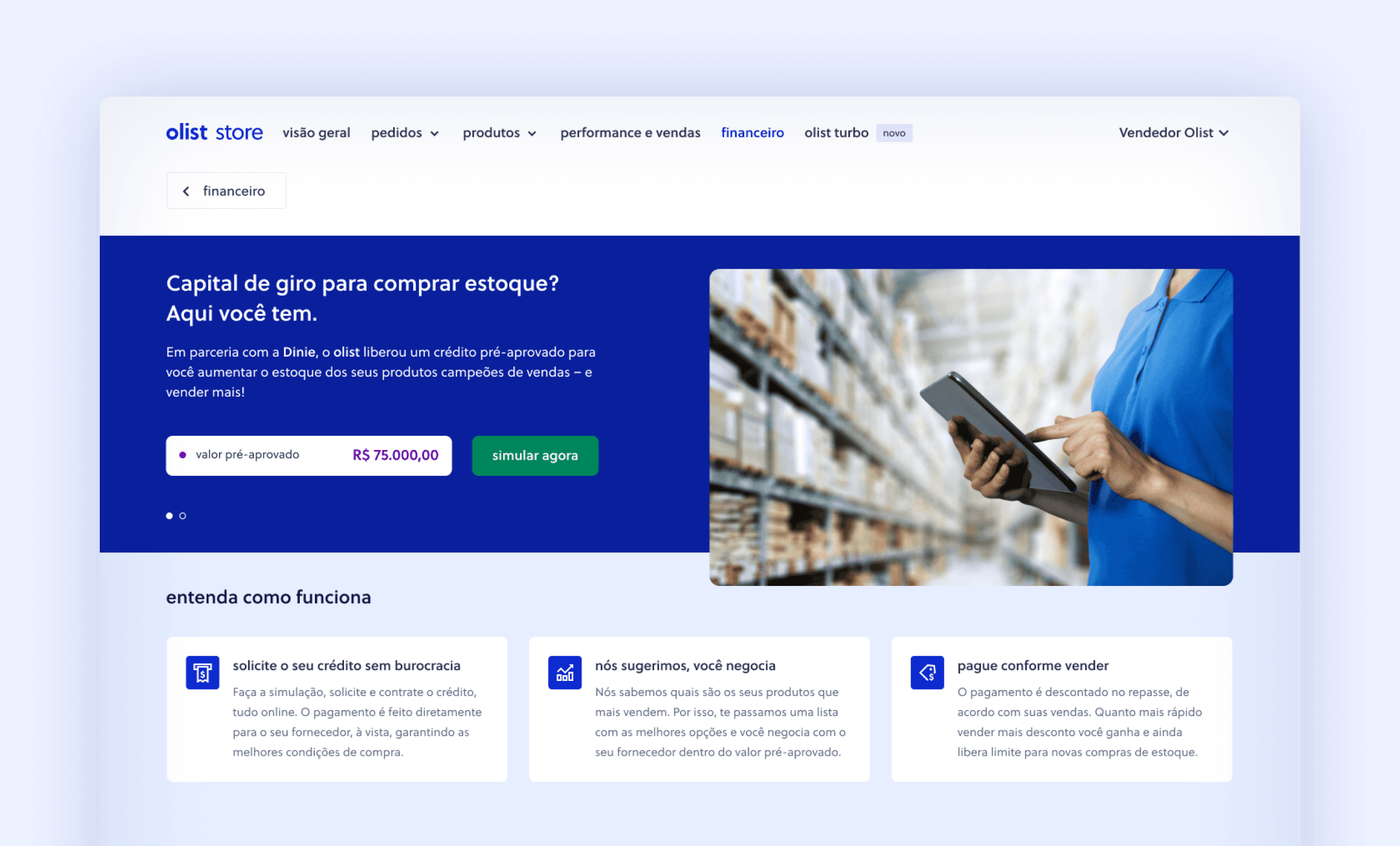
The final deliverable was a concise, transparent Landing Page visually aligned with the brand. Post-iteration usability tests indicated a drastic reduction in the time it took users to understand the product. By unifying benefits, textual clarity, and interactivity through the simulator, we transformed a complex financial service into the main hook for attracting new merchants into the Olist ecosystem.
Final thoughts
Learnings on Service Design and Collaboration
Although I left the company before tracking the post-launch metric results of the Landing Page, the project established itself as a highly promising initiative.
Designing for financial services is a challenge that requires balance, clearly displaying what is being offered while translating complex rules into something easy to understand.
This project taught me that beyond form, both function and content are foundational to the success of complex products, and that cross-departmental collaboration is indispensable to achieving the best possible outcome.